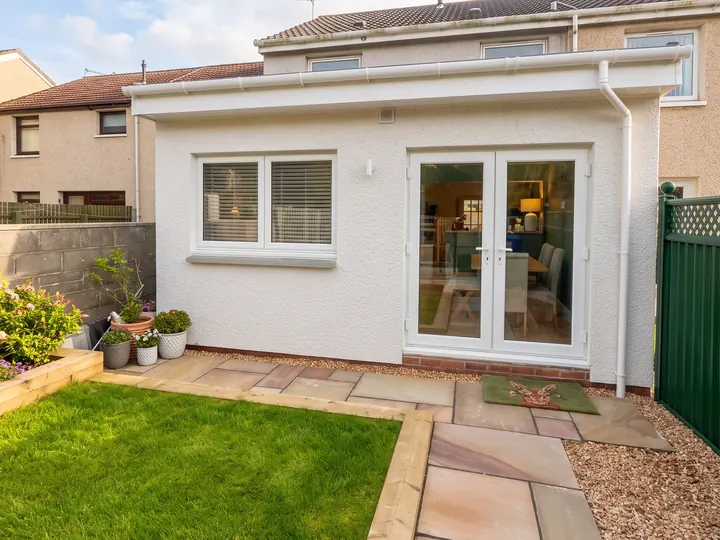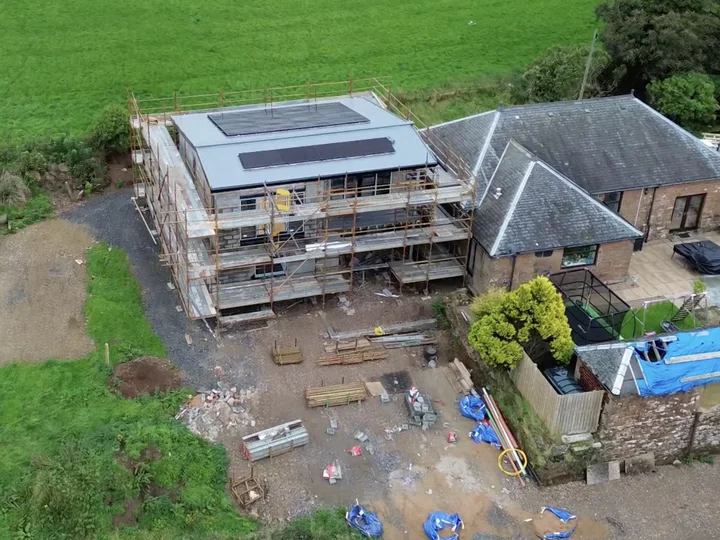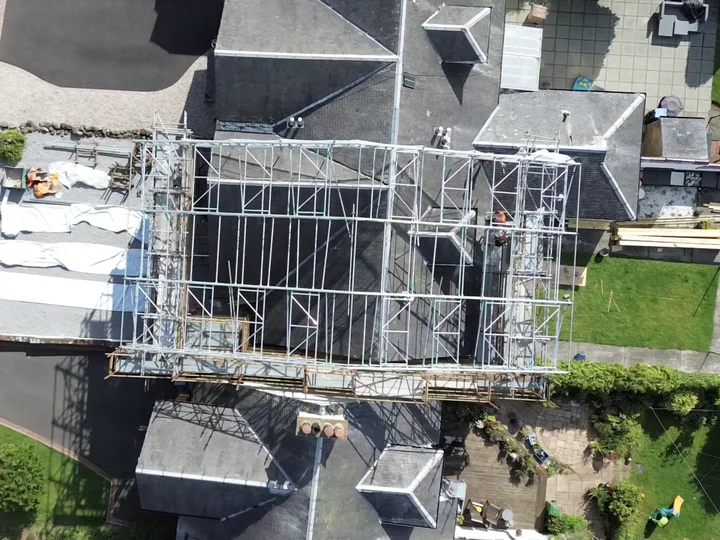
Building work is disruptive, even when it goes well. Knowing what will happen and when makes a big difference to how it feels. This is how we run our jobs.
Before the start date
- The building warrant is approved and any planning conditions that need to be met before work starts are dealt with.
- You get your quote, programme and payment stages in JobTread, our project management system.
- We agree access, where the skip and deliveries go, parking and which rooms are out of bounds.
- Anything that needs moving, such as furniture, garden items or the car, is planned in advance.
- Finishing choices with long lead times, like windows, doors and the kitchen, are made early so they arrive in time.
The first week
The first days are usually the noisiest. Scaffold goes up, the site is set up and protected, and work starts on the groundworks or the strip out. You will meet the team who will be on site with you.
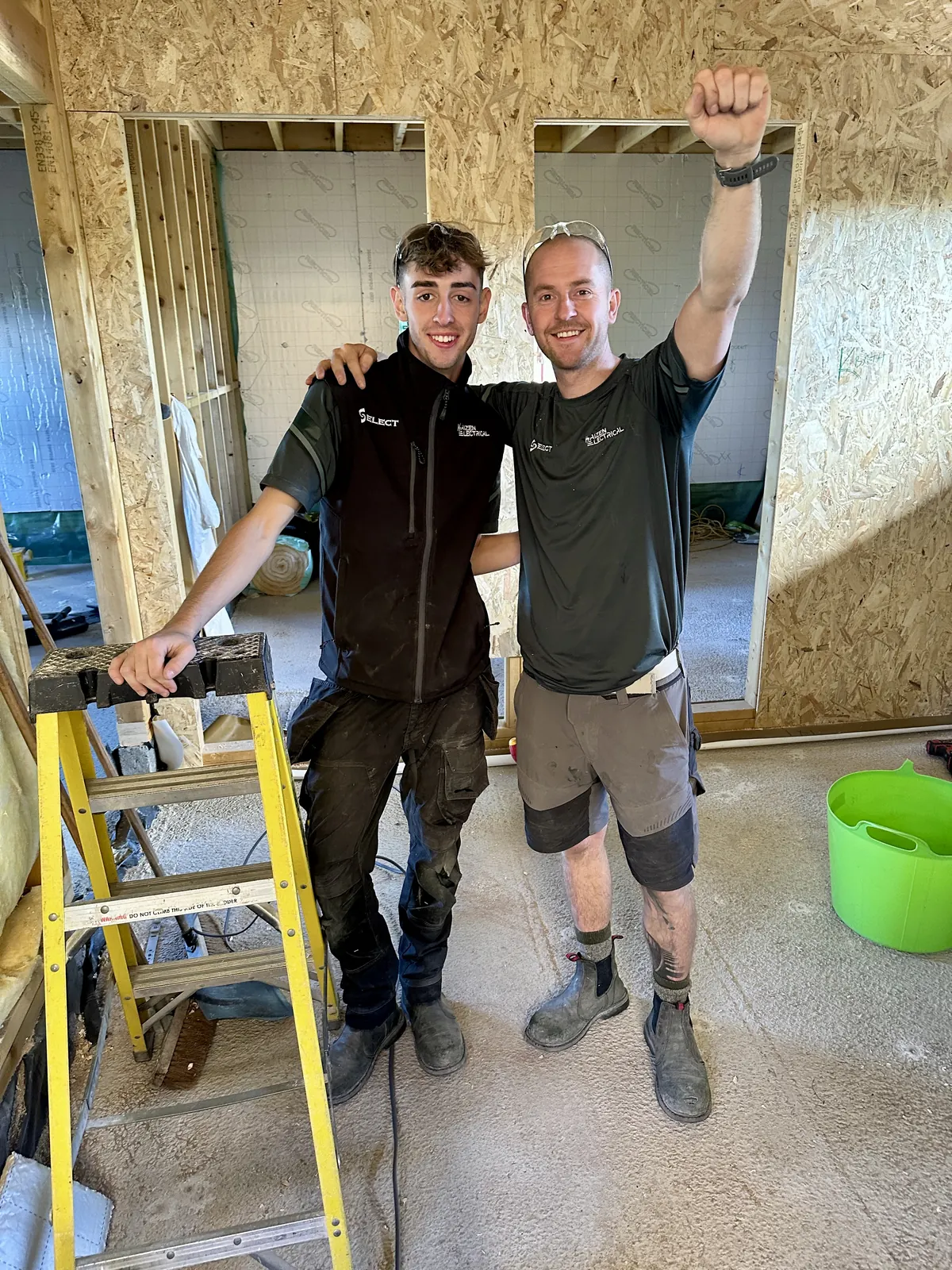
A tidy, protected site
- The route through your home is protected with dust sheets and floor protection.
- The site is tidied as we go and cleaned down at the end of each day.
- Every job has its own risk assessments, method statements and a Construction Phase Plan.
There will still be dust and noise. It is a building site, and pretending otherwise does nobody any favours.
Updates and decisions
Every job is run in JobTread. You can see progress updates and site photos, your invoices and every change order in one place, so you always know where the job is and nothing is agreed by text message and forgotten.
We will let you know in good time when a decision is needed, for example tiles, sockets or where a radiator goes, so the job is never held up waiting.
Changes along the way
Most projects have a change or two once you see the space taking shape. A change is priced and agreed in writing as a change order before the work is done, so the cost is never a surprise at the end.
Payments
- No large sums are taken before work starts.
- The first payment is due at the end of the first week on site, once materials are delivered and the team is working.
- After that, payments follow fortnightly, each against an invoice and paid by bank transfer.
- A small retention is held back until the defects period at the end of the job is complete.
Living at home or moving out
Most clients stay at home during the work, and we plan around that. If you can move out, especially for a loft conversion or a full renovation, the job is usually quicker, because the team is not working around a family and services can be left off until they are ready. A loft conversion booked in for eight weeks can often be done in five or six with the house empty. Living at home during building work.
Inspections and sign off
The council's building standards team may inspect at key stages during the build. We arrange those and deal with any questions. When the work is finished, we submit the completion certificate for the council to accept.
Handover, the defects period and the guarantee
- We walk round the finished work with you and agree anything that needs attention.
- A defects period of around four weeks follows, so anything that shows up once you are living with the space is put right.
- The retention and final payment are due once the defects period is complete.
- Every job then has a 12 month workmanship guarantee as standard, with an insurance backed extended guarantee available as an option.
A word about how it feels
Even on a job that runs well, clients get tired. Weeks of noise, dust and people in the house wear anyone down, and it can be hard to see the end while you are in the middle of it. That is normal. Keep the finished room in mind, and talk to us if anything is getting on top of you. We would always rather know.