A building project is often the biggest sum a household spends after the house itself. The builder you pick decides how the job is run, how it is priced, how your home is treated and what happens if something is not right. Price matters, but it is the last thing to compare, not the first.
Work through the checks below with every builder you are considering. A good one will be happy to answer all of them. If someone gets defensive, that tells you something too.
1. A registered company you can look up
Ask for the full company name and company number, then look it up on Companies House. It is free and takes a minute. You can see when the company was formed, who the directors are and whether its accounts are filed on time.
A limited company has to keep proper records, file accounts and stand behind its contracts as a business, not just as one person with a van.
We trade as Cutwood Joinery & Construction. Our registered company is Cutwood Joinery Ltd, company number SC789618, and the number is printed at the foot of every page of this website.
2. VAT registered
A VAT registered builder is a business of a size where the books are reported to HMRC every quarter. A small trader may not need to be registered, but for an extension, loft or new build you are usually dealing with a turnover well above the point where registration is required.
- Check the VAT number on the quote matches the company.
- Every invoice should show the VAT separately.
- Be wary of any offer to knock the VAT off for cash.
Our VAT number is on every quote and invoice, and every payment is made by bank transfer against an invoice.
3. Trade memberships you can check
Membership of a recognised trade body means somebody outside the company has checked the builder. In the UK the main ones for home building work are the Federation of Master Builders and TrustMark.
The Federation of Master Builders checks a builder's trading history, credit history and directors, asks for proof of insurance and sends an assessor to inspect work on a live site before membership is granted. Members agree to a Code of Conduct and the FMB offers homeowners a free dispute resolution service.
Anyone can put a logo on a van or a website. Always check the membership on the trade body's own website.
We are a member of the Federation of Master Builders, member number 166116, and TrustMark registered. See what FMB membership means.
4. Insured for the work
Ask what insurance the builder holds and ask to see it. As a minimum a builder working on your home should hold public liability insurance, and if they employ a team, employers' liability insurance as well.
Tell your own home insurer about the work before it starts too. Some policies change while structural work is going on.
We hold employers' liability and professional indemnity insurance, and we act as principal contractor on every extension we build.
5. Real work you can see
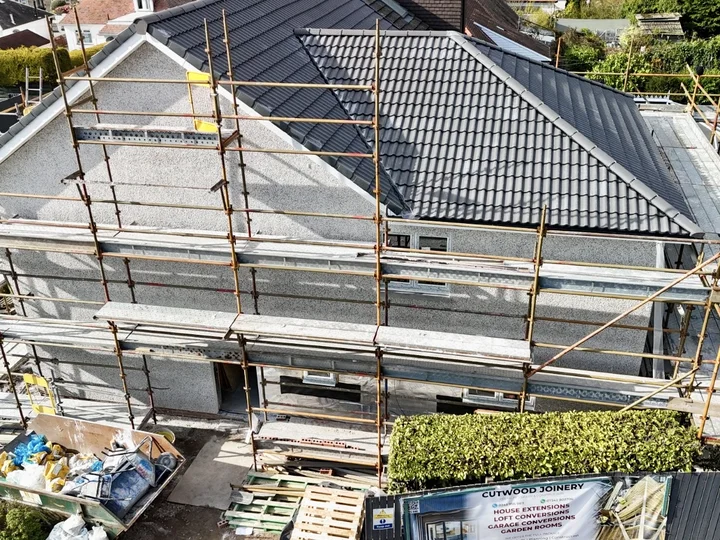
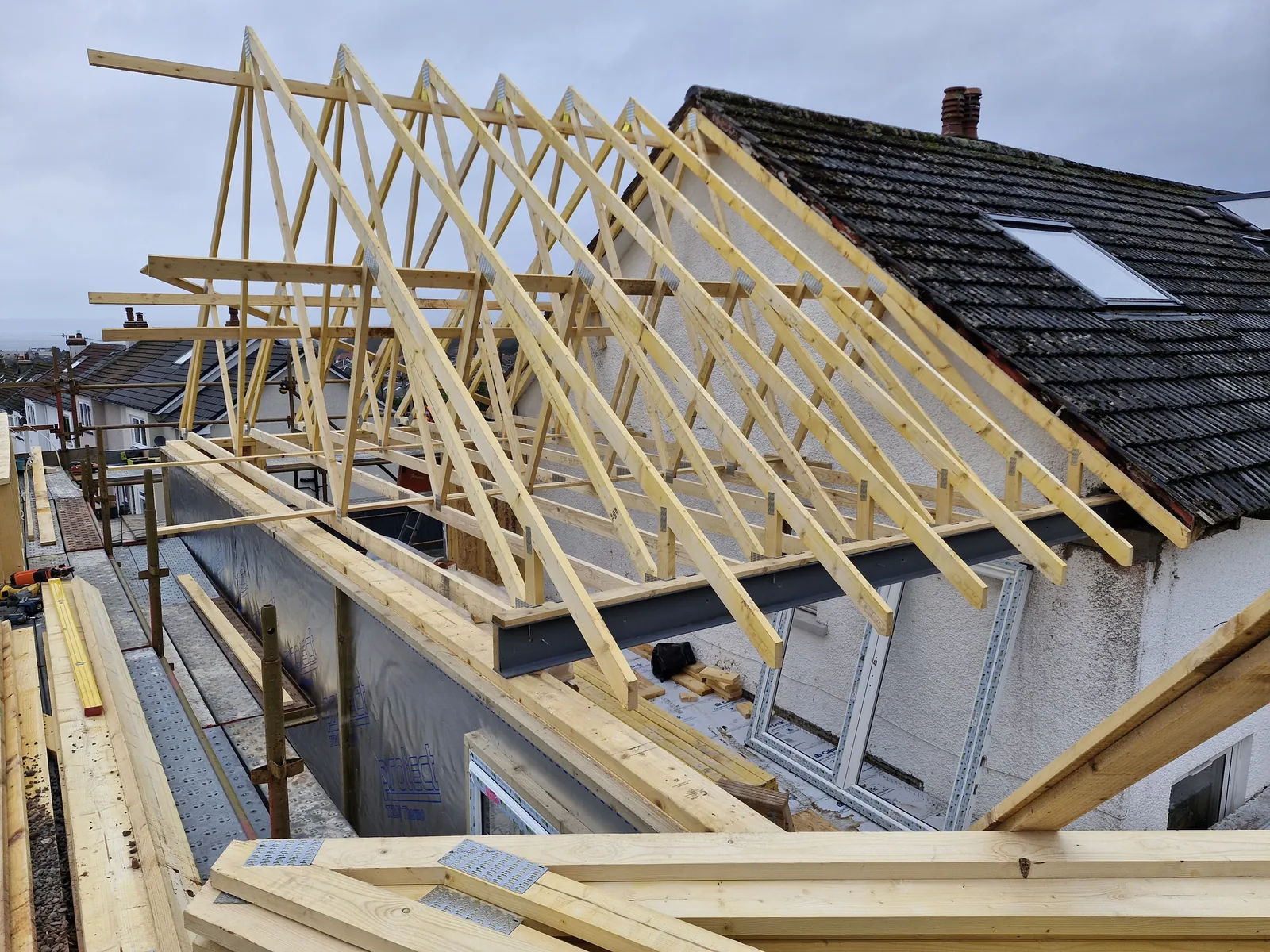
A builder's own photos of their own jobs are the best evidence there is. Look for whole projects, not just a handful of finished shots: the ground being dug, the steel going in, the roof going on. Anybody can find a nice picture of a kitchen. Only the builder who did the job has the photos of it being built.
- Ask to see jobs similar in size and type to yours.
- Ask how long ago they were done and who ran them.
- If you can, ask to speak to a past client or see a finished job.
Our project pages show each job stage by stage, from the first dig to handover, with timelines, videos and before and after photos. See our projects.
6. Reviews that describe the job
Read reviews on Google and on trade body profiles, not just the ones on the builder's own site. The useful reviews say what was built, where, how long it took and how problems were handled. A page of one line reviews tells you very little.
- Look at how the builder replies, especially to anything less than glowing.
- Check the dates. A builder with all its reviews from years ago may have changed.
- Look for repeat customers. People rarely go back to a builder they did not trust.
7. A proper website and social media
A serious building company shows its work online. A website with its own projects, its own team and clear contact details is a good sign. So is regular posting on social media from real sites.
Watch for websites built from stock photos, no address, no company details and no named people. It does not prove a builder is bad, but it means you are being asked to take a lot on trust.
8. A proper written quote
A proper quote is priced from drawings and set out line by line. It should say exactly what is included, what is not, what is a provisional sum and what the payment stages are. A figure on the back of an envelope, or a price per square metre, is not a quote.
- It should be based on the same drawings for every builder you compare.
- Exclusions should be written down, not left to be found later.
- Provisional sums should be explained, because they can go up.
- Design, planning, the building warrant and council fees should be either included or clearly listed as separate.
Our Quantity Surveyors measure every job from the drawings and price it line by line, with finishing items listed separately so you can see what each choice costs. How our Quantity Surveyors price a build.
9. How the job will be managed
Ask who runs the job day to day, how you will be kept up to date and how changes are agreed. Most disputes start with something agreed in a passing conversation that nobody wrote down.
Good builders use project management software, so the quote, the programme, updates, photos and every change are recorded in one place that you can see.
Every job we run is in JobTread. You get your quote, your stage invoices, progress updates, site photos and every change order in one place, so nothing is agreed by text message and forgotten.
10. Payments that follow the work
Be very careful with any builder who wants a large sum up front before anything has happened on site. Payments should follow progress: materials delivered, work done, stage reached.
- Stage payments should be set out in the quote before you sign.
- Every payment should be against an invoice and by bank transfer.
- A retention held until the end of a defects period is a sign of a builder who stands behind the work.
We do not take large sums before work starts. The first payment is due at the end of the first week on site, once materials are delivered and the team is working, then payments follow fortnightly. A small retention is held until the defects period at the end of the job is complete.
11. Health and safety on site
Your home becomes a building site. Ask who is the principal contractor, whether there will be risk assessments and method statements, and how the site will be kept tidy and safe for your family.
We are principal contractor on every extension we build, with RAMS and a Construction Phase Plan for every job. Health and safety on our sites.
12. The building warrant and sign off
In Scotland most structural work needs a building warrant before it starts, and a completion certificate accepted by the council when it is finished. Ask who is applying for the warrant, who deals with the building standards inspections and who submits the completion certificate.
Without an accepted completion certificate you can have problems when you come to sell or remortgage.
Our sister company, CWJ Architectural Design Services, prepares the drawings and the warrant application, and we deal with the council through to the completion certificate. Building warrants and completion certificates.
13. A guarantee in writing
Ask what happens after handover. A builder who believes in their work will offer a defects period and a workmanship guarantee in writing.
Every job has a defects period of around four weeks after handover, then a 12 month workmanship guarantee as standard. An insurance backed extended guarantee is available as an option.
Warning signs
- Cash only, or a discount for cash.
- No written quote, or a quote with no breakdown.
- A large deposit before any work or materials.
- Pressure to sign or start straight away.
- No company number, no address and no landline or office.
- No photos of their own work in progress.
- Telling you that you do not need a warrant without checking.
A quick checklist
- Company number checked on Companies House
- VAT number on the quote
- Trade memberships checked on the trade body's website
- Insurance seen
- Similar jobs seen, start to finish
- Detailed reviews read
- Written quote priced from drawings, with exclusions listed
- Payment stages agreed and tied to progress
- Building warrant and completion certificate responsibility agreed
- Defects period and workmanship guarantee in writing