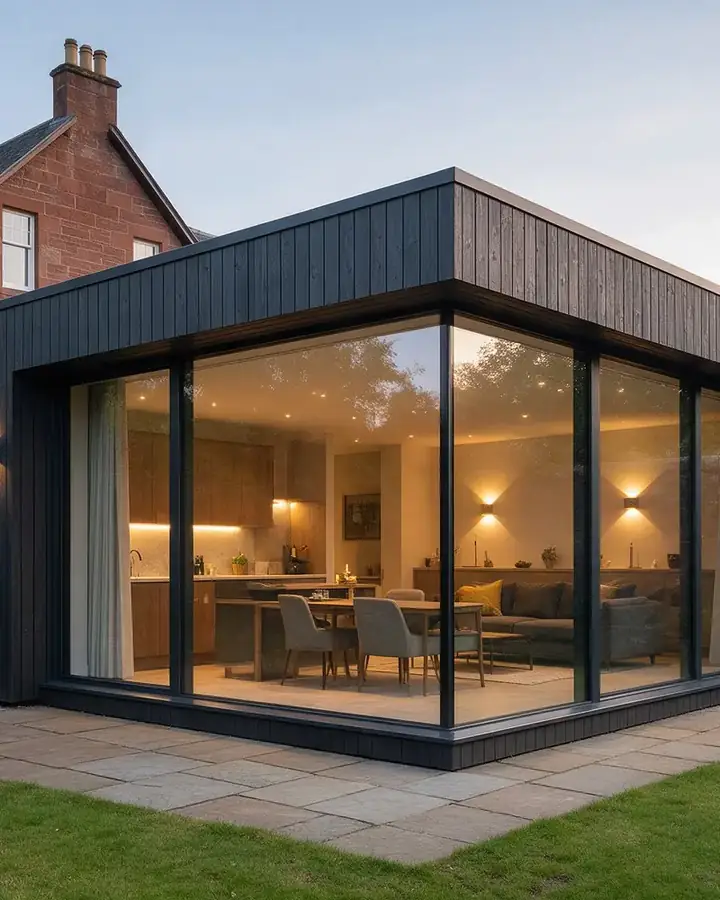
Planning in Scotland is run under Scottish law and by Scottish councils, so a lot of the advice online, written for England, does not apply here. This guide covers the Scottish system.
Planning permission and the building warrant
Planning permission decides whether you can build something at all: its size, how it looks, and its effect on neighbours and the street. It is decided by the council's planning department.
The building warrant decides how it is built: structure, fire safety, insulation, ventilation, drainage, accessibility and energy. It is decided by the council's building standards department, against the Scottish building standards.
- Many projects need both. Some need only a building warrant.
- Planning permission does not give you a building warrant, or the other way round.
- Work must not start until the building warrant is approved.
- When the work is finished, a completion certificate is submitted and the council has to accept it.
Permitted development
Some householder work can go ahead without a planning application under Scotland's permitted development rules. These cover things like some smaller single storey extensions, some roof alterations and porches, within limits on size, height and position.
Permitted development rights are reduced or removed for flats, for listed buildings, in conservation areas and where a council has taken them away. A building warrant is usually still needed even when planning permission is not.
If you want certainty, the council can issue a Certificate of Lawfulness confirming that the work does not need planning permission. It is worth having if you plan to sell.
Conservation areas and listed buildings
In a conservation area, more types of work need planning permission, and the council will look closely at materials and design. A listed building also needs listed building consent for alterations that affect its character, inside or out. Doing work to a listed building without consent is a criminal offence, so always check first.
How an application works
- Drawings and supporting documents are prepared and the application is submitted online through eDevelopment.scot.
- The council validates it, then notifies the neighbours and may advertise it.
- Neighbours and others have a period to comment.
- The planning officer assesses it against the local development plan and may ask for changes.
- The council decides, usually with conditions attached.
For most householder applications councils aim to decide within two months of a valid application. Larger or more complicated applications take longer.
Our sister company, CWJ Architectural Design Services, prepares the drawings and submits the planning and building warrant applications, and deals with the council's questions along the way.
Conditions
Most permissions come with conditions, for example on materials, windows or drainage. Some have to be discharged before work starts. Read them carefully, because breaking a condition can lead to enforcement.
If planning is refused
You can usually change the design and apply again, or appeal. Many refusals are about a specific issue, such as overlooking or the size of a rear extension, that can be designed out. Speaking to the planning officer before a decision is made can often avoid a refusal altogether.
Title deeds and Scottish Water
Planning permission is not the only consent to think about. Title conditions in your deeds can restrict alterations, and building over or near a public sewer needs Scottish Water's permission.
Planning, warrant and building with one company
Because the design, the planning and warrant applications, the price and the build all sit with one company, the drawings are made to be built and priced, not just approved. How design and build works.